
Why What’s Not Written Can Haunt Your Compliance Later and How Everyday Documentation Choices Decide Whether Good Care Stands or Falls

We looked at how documentation anchors clinical integrity, aligning assessments, treatment, and payer expectations around a single truth. Missed that issue? Read it here.
Even highly skilled teams run into the same avoidable mistakes, most of which aren’t about care quality, but because the record is unclear.
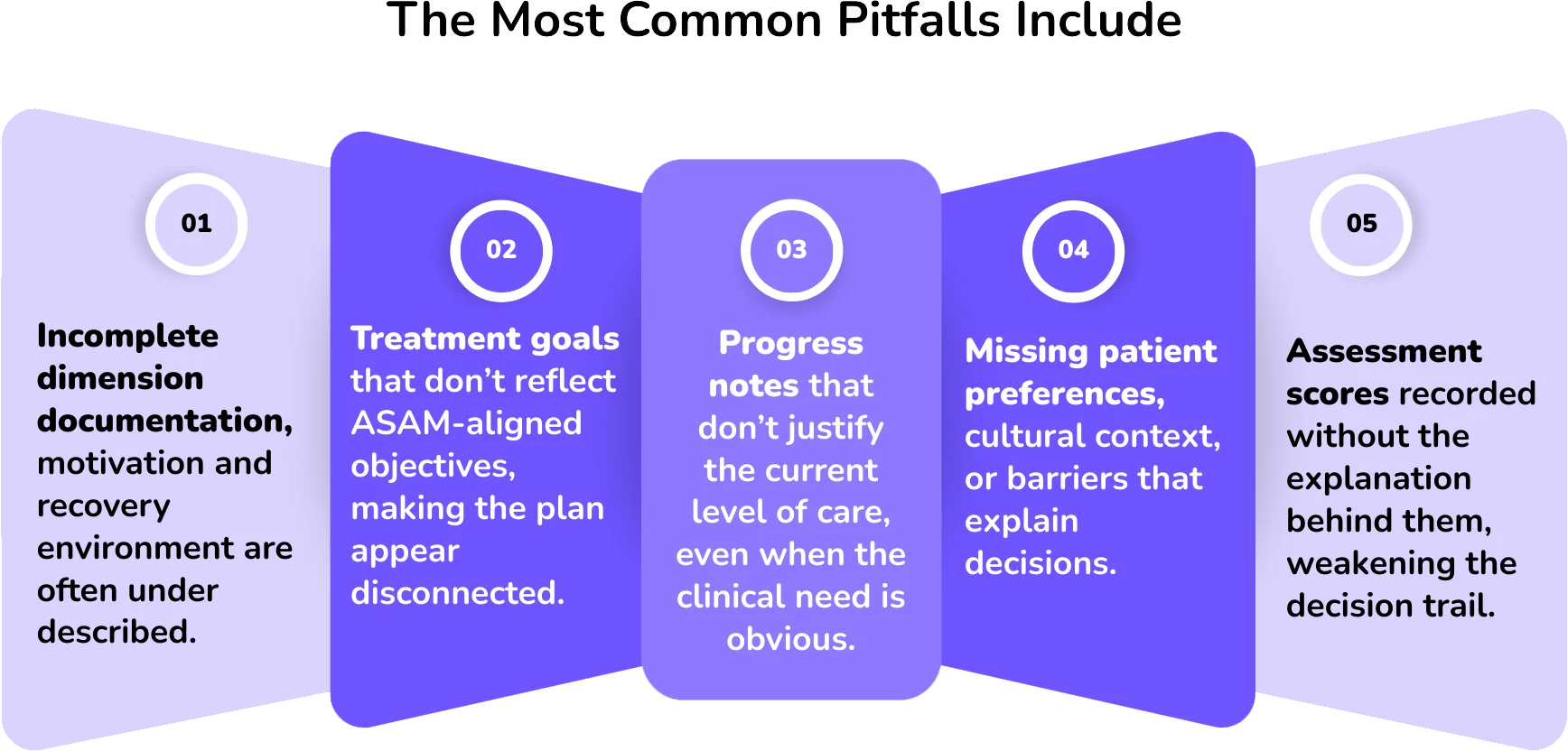
As facilities adopt ASAM 4.0, a clear pattern appears: documentation becomes a clinical instrument. Fewer denials. Smoother audits. Patients receive care that’s justified in the chart as well as in practice. Teams start to see notes as the place where compliance and consequence coexist. They can see the impact unfold in real time, turning every note into the fine line where compliance meets consequence.
Adolescents’ Social Media Use and Mental Health | University of Cambridge (2025)
Study finds adolescents with mental-health conditions spend more time on social media, compare themselves more, and report mood changes, informing digital-wellbeing interventions.
Variation in Antidepressant Side-Effects | King’s College London (2025)
Meta-analysis across multiple trials reveals significant differences in short-term physical side effects of antidepressants (weight, cardiovascular signals), supporting personalized prescribing beyond symptom reduction.
AI Chatbots Pose Mental-Health Risks | Stanford University (2025)
Campaigns this year stress that in conflict and disaster zones, one in five people can develop a mental-health condition. Underscoring urgent needs for resilient systems.
Join thousands of professionals who trust Binario Research for the latest healthcare and automation insights. Stay ahead with our weekly newsletter.