The Binario Bulletin | January 2026 Edition

The Science of Starting Again

The Quiet Work of the Mind and Habits as the Year Begins

In last month’s issue, we opened a conversation on how ASAM 4.0 transformed documentation into the engine behind every clinical decision. Records were no longer passive archives, they became the reasoning behind every choice, they were gaps that could stop care in its tracks.

The December issue showed that documentation sits at the intersection of compliance and consequence. If you missed it, it’s worth revisiting, because January builds on that quiet principle: small, consistent actions matter more than sudden leaps.  Missed that issue? Read it here.

A Different Kind of January

January doesn’t make announcements. It doesn’t announce itself with urgency. Rather, it arrives through subtle habits. A familiar coffee mug, gazing at the quiet morning light, a pause before action. The mind is negotiating rhythm with itself, not racing toward resolutions.

Neuroscience calls this re-entry friction: after a break, the brain doesn’t instantly regain focus or motivation. Instead, it slowly recalibrates, relying on small cues, habitual patterns, and environmental nudges to re-establish equilibrium.

This month’s issue is about noticing that work, appreciating it, and understanding how the unconscious mind and habits quietly prepare us for what’s ahead.  Read More

Small Habits, Big Returns

Behavioral science shows that change rarely happens in bursts.
The mind prefers consistency over intensity, small cues over sweeping promises:
  • One honest sentence written daily beats a perfect journaling plan.
  • Short pauses before responding can regulate emotions more than structured mindfulness routines.
  • Habits anchored to existing routines stick far better than aspirational goals set in isolation. New year resolutions can be best realized through consistent action.

Research from University College London confirms that slow, reliable habits are the brain’s most preferred pathway to sustainable change.

In practice, the first weeks of the year are less about resolutions and more about quiet, accumulative steps that restore balance.  Read More

Across American Cities: January in Motion

Even geographically distant, January follows a similar, understated pulse across the U.S.

Different climates, routines, and city cultures, yet the underlying truth is shared: January restores rhythm through small, trusted signals, not abrupt change.  Read More

Creativity, Movement, and the Mind

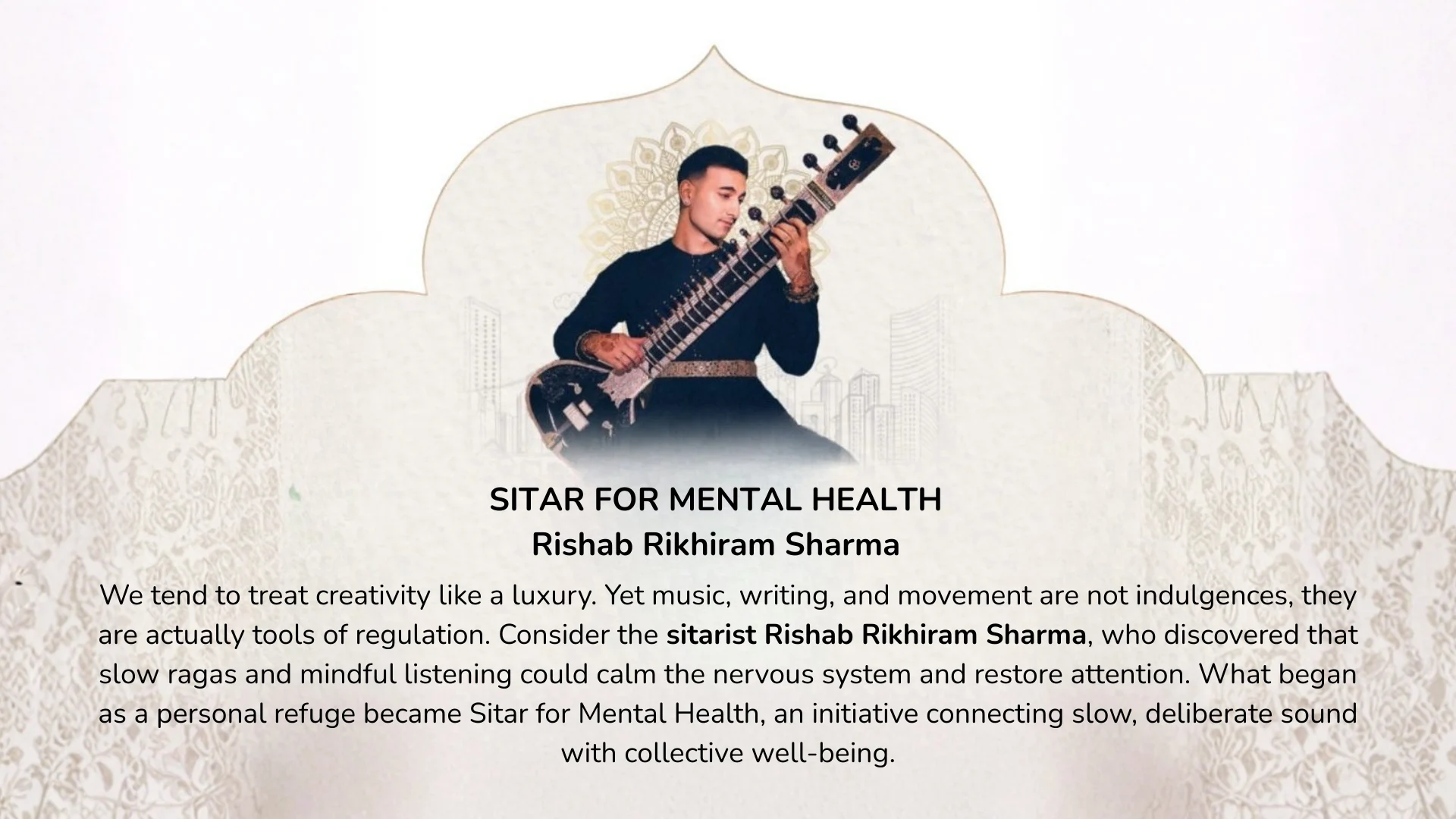
Science supports this: harmonic frequencies influence the nervous system even without conscious effort, while brief physical activity or mindful reflection helps the brain complete emotional cycles. Small, intentional moments teach the mind to feel safe and restore clarity.  Read More

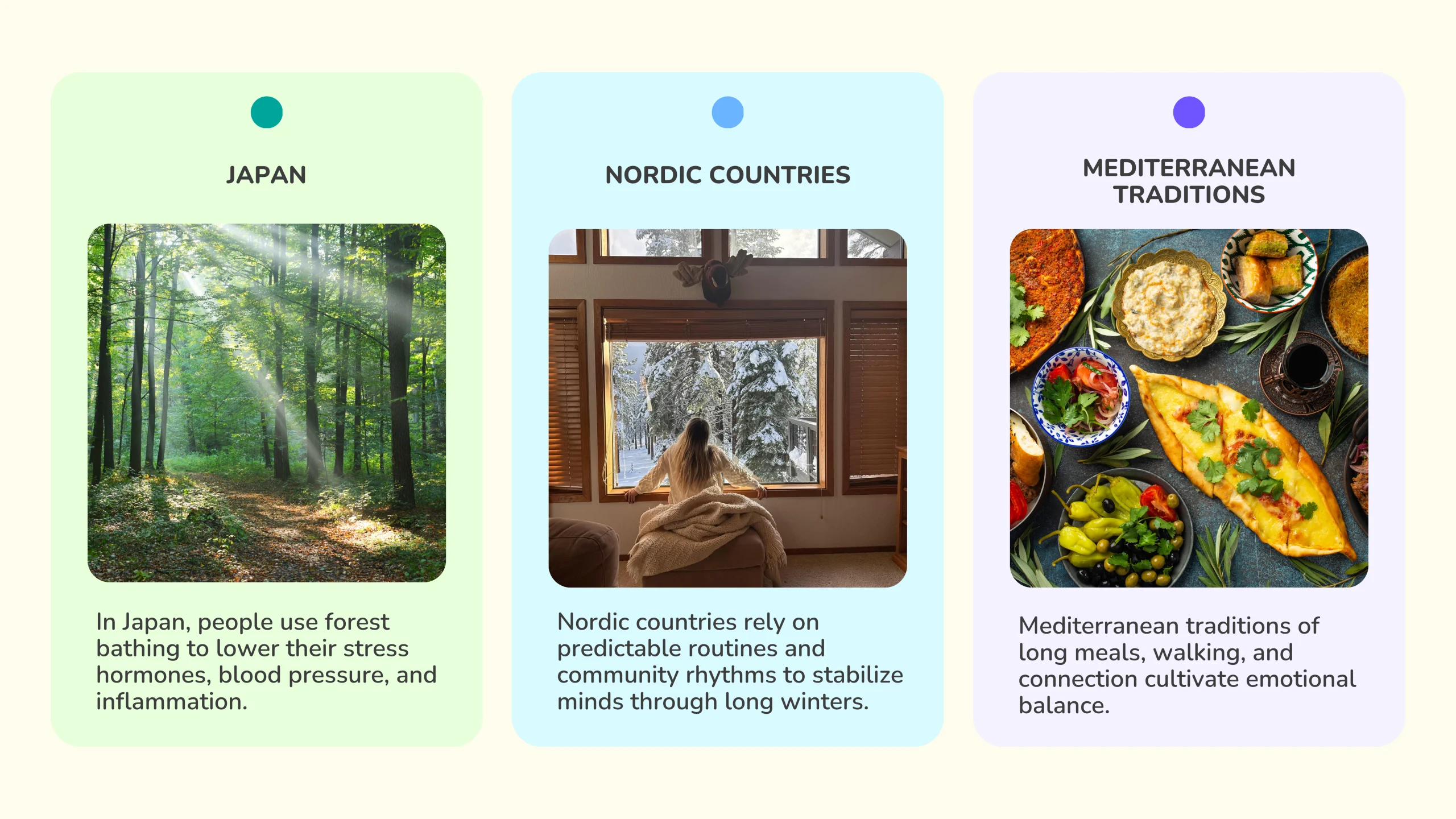
How distant cultures battle mental health

Wellbeing has long been embedded in daily life, not headlines. People from distant geological locations have their own ways of effectively battling mental health stress-related issues.

Different cultures, same lesson: the mind thrives on trust, familiarity, and repetition.
January is our opportunity to let these patterns quietly guide us, whether through movement, reflection, or small daily rituals.

Navigating the Unseen Challenges Teens Face

Even when routines return, some challenges quietly linger. Across the United States of America, many families face a familiar struggle: teens navigating stress, anxiety, or early mental health concerns that can disrupt school, relationships, and daily life.
Support exists, but the options can feel confusing. Intensive programs, outpatient care, and therapy all look different, and families often don’t know what fits best or when to seek help. Clarity before crisis makes all the difference. Small, informed steps can change a year, sometimes a life
This is the vision behind The Adolescent Network: an effort to help families understand the options, see what each level of care provides, and connect to guidance that meets teens where they are. Read More
Latest News in Behavioral Health Space

  • Mental Health | A Popular New Year’s Resolution, Survey Finds
    A new American Psychiatric Association poll reveals that 38% of Americans plan to prioritize mental health as a 2026 New Year’s resolution, highlighting increased awareness of daily habits like physical activity, mindfulness, and sleep in emotional wellbeing.
     -APA Poll 2026, Drugs.com-
  • Mental Health Disorders | Often Overlap Due to Shared Genetic Factors
    The Adolescent Brain Cognitive Development (ABCD) Study tracks 12,000 U.S. children over many years, offering an unparalleled resource on mental health, cognition, substance use, environment, and brain development correlations.
     -Wikipedia summary of a major NIH‑backed cohort, 2025-
  • Only a Small Fraction of People Receive Effective Treatment for Mental/Substance Disorders
    A large global survey finds that only 6.9% of individuals with mental health or substance‑use disorders receive truly effective treatment, highlighting critical gaps in care systems worldwide.
     -University of British Columbia & Harvard research, 2025-

The Binario Bulletin — January 2026

Voice of the Clinicians

“Not sure if this counts, but I’ve started letting patients pick a song for our last 5 minutes of session. Weirdly, it’s become the highlight of the day for some, and honestly, it keeps me smiling too.”
– Mental Health Specialist, Community Behavioral Health Center, Westcoast –
Every clinician has a story, a quick win, a clever fix, or a “why didn’t we do this sooner?” moment worth sharing.
This new corner of the Bulletin is where your insights, tips and little sparks of wisdom take center stage. Think of it as a friendly exchange between minds who get what the work really feels like.
And who knows, next month, it might be your words lighting up this space.
💡
Just hit reply to this email to submit yours. Please include your name, position, and organization. 
 You might get featured in next month’s Voice of the Clinicians!

Subscribe Now

Join thousands of professionals who trust Binario Research for the latest healthcare and automation insights. Stay ahead with our weekly newsletter.

Begin Your 60-Day Trial Today