
The Binario Bulletin | May 2026 Edition
The Cost of Not Seeing the Space Where Patients Wait

In previous edition, attention shifted from documentation and compliance to something less clinical but equally consequential. A name that just keeps coming up every now and then. Salesforce. Not introduced as a solution, but as a reflection of growing pressure inside behavioral health organizations. A recognition that the work behind care is becoming too complex to remain informal.
But awareness alone raises deeper questions:
If structure matters, what exactly are we measuring and why does it matter now?
Visit the previous Edition Newsletter to understand how Salesforce is completely reshaping behavioral health across the United States.
Why “CRM” Still Raises Eyebrows | Even as Adoption Grows in U.S. Healthcare
Mention CRM in a clinical leadership meeting and you will often feel the pause. The term carries commercial weight. It sounds transactional. Automated. Sales-driven.
Yet, in broader healthcare operation, CRM-like functions already have measurable impact:
- In call handling for healthcare providers, 40% of digital-generated leads convert to appointments once answered and qualified and nearly half of phone contacts book immediately on the call.
- Benchmarks across millions of healthcare calls show 48% of calls from digital marketing convert to leads and 40% of those convert on the spot, revealing the power of timely response paired with structured intake.
The “5-Minute Rule” That Could Reshape Behavioral Health Intake.
Across industries with high-consideration services, response time isn’t a soft metric, it’s a conversion determinant.
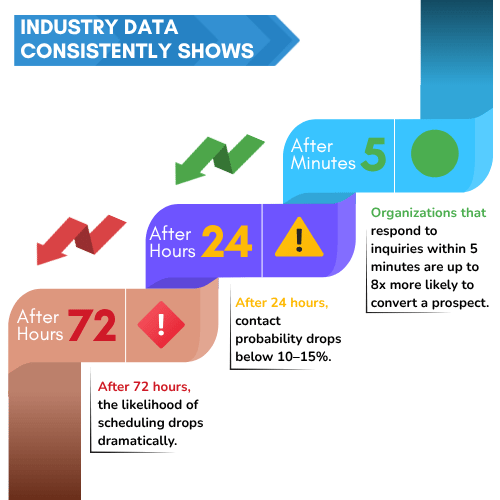
Why “CRM” Still Raises Eyebrows | Even as Adoption Grows in U.S. Healthcare
In behavioral health, these delays in making contact and responding timely aren’t always neglect.
They’re diffusion.
- Voicemails live in one system.
- Insurance checks in another.
- Notes in inboxes.
- Availability in spreadsheets.
When visibility fragments, timing slips.
CRM centralizes that early window. Not to automate the human compassion that sits at the core of behavioral health, but to protect it.
And it directly influences whether a prospect converts or not. Ultimately, it is about the patient whose access to care depends on whether someone responds in time.
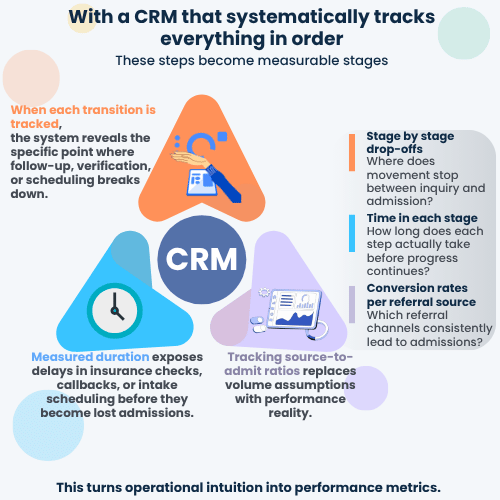
How CRM Turns Fragmented Data Into Operational Intelligence
Across the United States, behavioral health organizations work across layers. Referrals sit in call logs. Insurance verification lives in billing systems. Intake notes remain in inboxes. Census numbers appear in reports. Each team sees only part of the picture.
The data exists. It is simply disconnected.
When organized through CRM, these fragments become a unified operational view. Leaders can measure time to first contact, referral source performance, intake bottlenecks, and workload distribution across admissions teams.
This shift toward centralized visibility is accelerating nationwide. The U.S. healthcare CRM market was valued at approximately $6.9 billion in 2023, reflecting provider investment in measurable coordination and operational oversight.
A Single View, Same Data but A Different Outcome
CRM does something subtle but transformative: It turns conversations into data questions.
Instead of wondering:
“We feel referrals slowed last week.”
Teams can pinpoint and directly ask:
“Why did conversion drop 12% from inquiry to scheduled intake between Monday and Friday?”
It’s purely a matter of being able to see the problems on time or not. CRM does not solve every operational problem. It makes problems observable.
Visibility changes priorities and It changes decisions. It changes leadership questions from opinion to evidence.
And once operations become measurable, outcomes become improvable.
CRM Is the Beginning, Not the End
The backbone of Salesforce and CRM is now visible. The activity moving through it can be measured. Conversion rates, response speed, workflow structure, all of it begins to take shape under constant tracking.
But dashboards and reports are not the destination. They are just the foundation.
Tracking and monitoring activity is one level of operational maturity in clinical settings. Connecting and integrating all systems in one place is another.
That is the conversation unfolding in the next edition of Binario Research’s Newsletter.
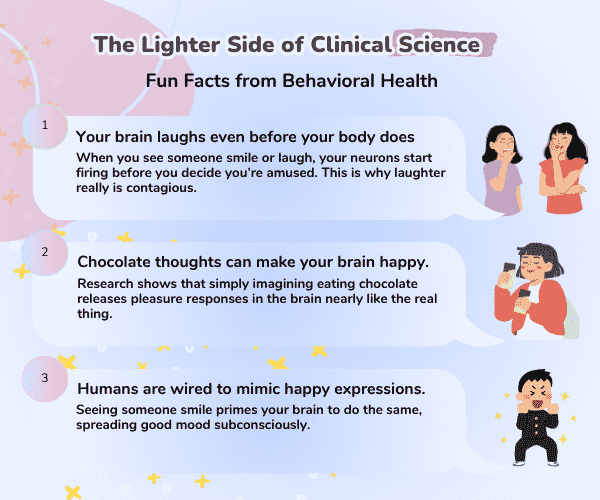
Latest News in Behavioral Health Space
- Mental Health | School Discipline Reimagined Through a Mental Health Lens
Research from Wayne State University highlights efforts to rethink school discipline by integrating mental health principles, aiming to improve student outcomes and reduce punitive practices that harm emotional wellbeing.
-Wayne State University, 2026- - Adolescent Distress | One in Three Teens Reports Serious Psychological Symptoms
A new report shows that about 30% of California adolescents experience serious psychological distress, with girls and older teens reporting higher rates, underscoring the need for expanded school‑based mental health support.
-Public Policy Institute of California, 2026- - System Expansion | NYC Health + Hospitals Reports Gains in Behavioral Health Access
NYC Health + Hospitals announces increased inpatient psychiatric capacity and outpatient visits under its Behavioral Health Blueprint, with high patient satisfaction and more streamlined transfers across care levels.
–NYC Health + Hospitals, 2026–
The Binario Bulletin — May 2026
Voice of the Clinicians
“Not sure if this counts, but I’ve started letting patients pick a song for our last 5 minutes of session. Weirdly, it’s become the highlight of the day for some, and honestly, it keeps me smiling too.”
– Mental Health Specialist, Community Behavioral Health Center, Westcoast –
Every clinician has a story, a quick win, a clever fix, or a “why didn’t we do this sooner?” moment worth sharing.
This new corner of the Bulletin is where your insights, tips and little sparks of wisdom take center stage. Think of it as a friendly exchange between minds who get what the work really feels like.
And who knows, next month, it might be your words lighting up this space.
This new corner of the Bulletin is where your insights, tips and little sparks of wisdom take center stage. Think of it as a friendly exchange between minds who get what the work really feels like.
And who knows, next month, it might be your words lighting up this space.
💡
Just hit reply to this email to submit yours. Please include your name, position, and organization.
You might get featured in next month’s Voice of the Clinicians!
You might get featured in next month’s Voice of the Clinicians!