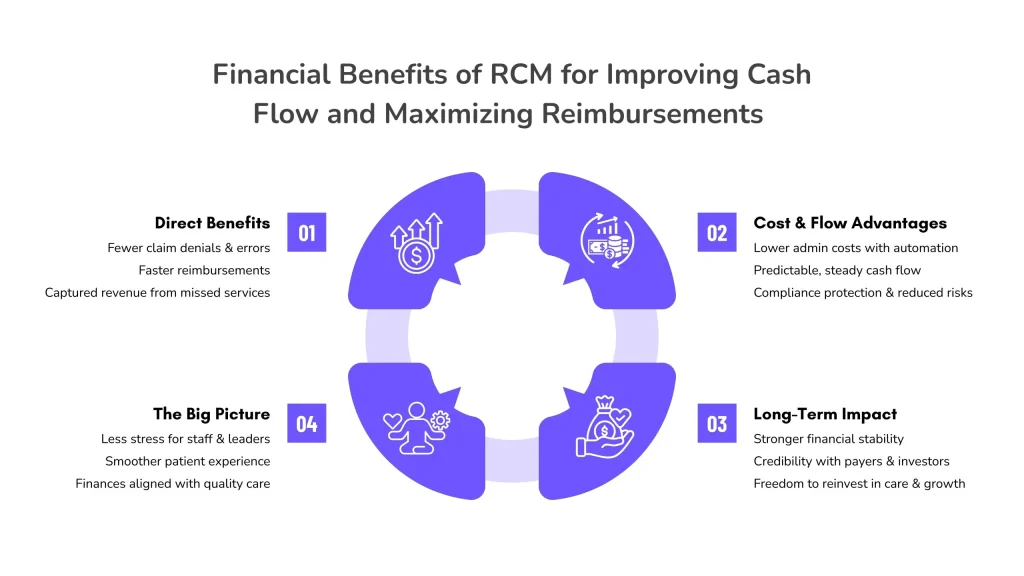
Financial Benefits of RCM for Improving Cash Flow & Maximizing Reimbursements
An optimized RCM system is more than convenient. It cuts down billing problems, shortens payment times and captures revenue you might miss otherwise. Instead of staff spending hours fixing rejected claims, they put energy into real care. Over time, processes feel smoother and costs drop. Confidence grows when the financial side runs with less chaos, and providers who know what Revenue Cycle Management actually involves in behavioral health often see just how closely finances and care are tied.
Here’s a closer look at what that really means in practice.
Reduced claim denials
Errors in coding or missing details cause denials. RCM solves this by catching mistakes before claims go out. The fewer denials you face, the more money shows up on time. It stops revenue from being locked up in appeals. Fewer denials also mean staff aren’t wasting hours fixing what could have been avoided. That’s a huge relief for the team, and many of these problems overlap with the key billing challenges behavioral health providers face from documentation errors to payer requirements.
Faster reimbursements
Nobody likes waiting for payments. With accurate claims, payers release money sooner. This keeps cash moving and avoids financial gaps. Faster reimbursements mean salaries, bills and resources don’t hang in limbo. Leaders can reinvest without holding their breath for weeks. Quick turnaround also builds trust with payers. They see your claims are clean and process them faster in the future.
Improved revenue capture
Every service matters, yet sometimes a session goes unbilled. RCM tracks each step so no care goes unpaid. That alone can make a big difference in yearly income. More captured revenue means more staff, better tools and expanded services. It’s not about squeezing patients; it’s about making sure every hour of care gets counted. Over time, this builds financial strength you can feel.
Lower administrative costs
Endless paperwork eats time and money. Automated RCM trims that load. Staff spend fewer hours correcting mistakes and more hours helping patients. Costs shrink when manual work drops. It doesn’t happen overnight but the savings stack up over time. Less wasted effort also keeps morale higher. Nobody enjoys repeating the same billing fix again and again.
Predictable Cash Flow
Steady money flow changes everything. When revenue is predictable, leaders can plan clearly, without any guessing or scrambling. And as a result payroll becomes smoother and budgets realistic. And hence expected cash flow gives space to breathe and focus on growth. You start to plan ahead instead of reacting. That kind of stability reduces stress across the entire organization, and for many centers, adopting automation and compliance-driven RCM approaches has been key to keeping that flow steady. In 2023, commercial payers took 19.7% longer to process and pay hospital claims vs. the prior year, which makes predictability crucial.
Compliance Protection
Rules in healthcare are strict. Falling behind hurts both reputation and revenue. Optimized RCM keeps billing in line with payer rules. This keeps the centers safe from costly mistakes and protects the income. Trust between patients and partners is also increased through compliance. People feel safer knowing finances are handled correctly. Fewer risks mean more security long term, and technology also plays a role here as many centers now look into software and AI innovations for behavioral health RCM to strengthen accuracy and reduce staff workload.