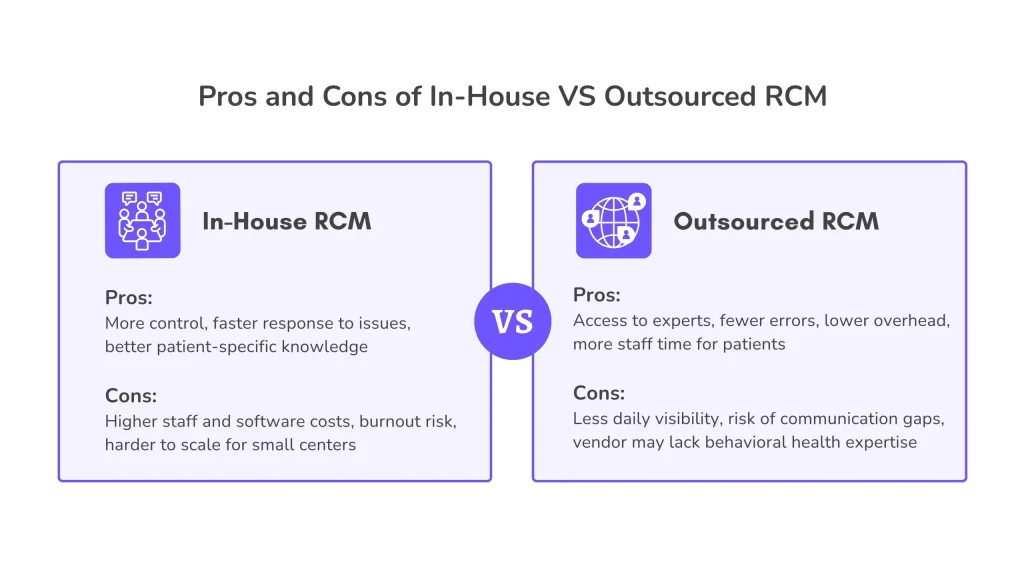
Running a behavioral health practice can feel rewarding but it is also exhausting. Most providers are already stretched thin with sessions, heavy paperwork and patients who need time. On top of all that, billing never slows down. Claims go out, some get denied, staff chase corrections and the loop never ends. Understanding outsourcing vs. in-house RCM helps practices decide how to manage billing efficiently and keep revenue flowing.
RCM keeps the money moving so practices do not sink. If you’re new to RCM or want a deeper breakdown, here’s a comprehensive guide on Revenue Cycle Management for Behavioral Health Centers that covers the full process. The real struggle is deciding whether to keep it inside the practice or hand it to an outside company. This is where Outsourcing vs. In-House RCM becomes a key consideration. Each path has clear wins and some headaches. For behavioral health, the choice is tricky because sessions last longer, notes are dense and insurers are quick to question every small detail, which is another reason RCM is different in behavioral health compared to general healthcare.