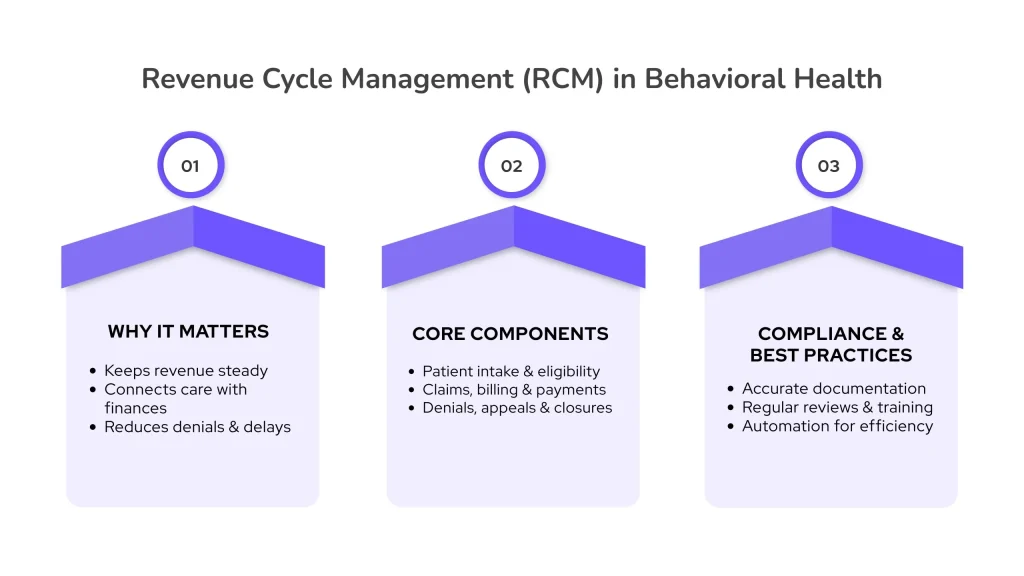
RCM has many moving parts. Every step matters. If one breaks down, the whole system slows. In behavioral health, the process feels tougher because sessions stretch out and payers demand more proof than usual. Think of it as a chain. Each link has to hold or the cycle falls apart.
Patient registration and intake
Everything starts here. Get the details wrong and it follows you through the whole process. Staff collect names, insurance info and contacts. A small mistake at this point may block a claim months later. In behavioral health, where patients stay in care longer, that error multiplies over time.
- Ensure accurate demographic and insurance entry at the first step.
- Use digital intake forms to minimize manual errors.
- Train staff on payer-specific requirements.
- Update information regularly for long-term patients.
Eligibility and benefits verification
After intake comes eligibility. It’s not optional. Some payers limit sessions. Others demand approvals before care even starts. If you skip it, the claim won’t get paid. Patients also end up frustrated if they thought coverage was in place. A quick verification up front saves weeks of problems later.
- Verify benefits before the first appointment.
- Track authorization requirements for ongoing sessions.
- Check session limits and co-pays upfront.
- Communicate coverage clearly to patients.
Clinical documentation and coding
Notes and codes keep the revenue moving. Providers must record what happened and coders must translate it. Payers want proof that care is needed. Missed signatures, vague notes or old treatment plans create denials. In behavioral health, documentation runs deep and small errors hurt more. Clean notes and correct codes mean smoother payments.
- Keep treatment plans updated and signed.
- Use the correct CPT/ICD codes for behavioral health.
- Train providers on payer documentation standards.
- Audit notes regularly for completeness and compliance.
Claim submission and processing
Submitting claims should feel routine but it often isn’t. A clean claim flows through the system fast. A claim with errors bounces back. Fixing it takes staff hours. Behavioral health claims get more checks than others, which makes accuracy vital. Good submission processes protect the center’s cash flow.
- Submit claims daily to maintain cash flow.
- Use claim scrubbers to catch errors before submission.
- Monitor payer-specific formats and rules.
- Track rejections and resubmit quickly.
Payment posting and collections
Payments come in and they must be posted right away. This step sounds simple but it isn’t. Reconciling amounts helps spot short payments or mistakes from payers. Without it, money slips away unnoticed. For behavioral health leaders who rely on steady revenue, timely posting provides real clarity.
- Post payments within 24–48 hours.
- Match payments against contracted rates.
- Flag underpayments for follow-up.
- Keep patients updated on balances.
Denial management and appeals
Denials happen. The question is how quickly they’re handled. A lot of denials happen because some papers are missing or the approval wasn’t taken on time. Fixing them fast and appealing saves lost revenue. Tracking patterns also helps prevent the same problems from showing up again. A solid denial process means fewer headaches and more money recovered. AMA reports claim denials rose to around 11% nationally and hospitals were collecting just 94% of expected revenue within six months, down from 97% in 2021.
- Sort denials into categories so it will be easy to identify reoccurring issues.
- File an appeal asap with all of the required documentation.
- Educate staff members about frequent denial reasons.
- Track resolution time and outcomes.
Patient collections and account closure
The last piece is closing the account. Patients may owe co-pays or deductibles. Collecting them is sensitive, especially in behavioral health. Clear, respectful communication makes the difference. It keeps trust intact while still settling balances. A thoughtful process here helps keep the cycle strong.
- Set expectations upfront about patient responsibility.
- Offer multiple payment options (online, phone, in-person).
- Train staff in compassionate financial conversations.
- Send timely reminders without pressuring patients.