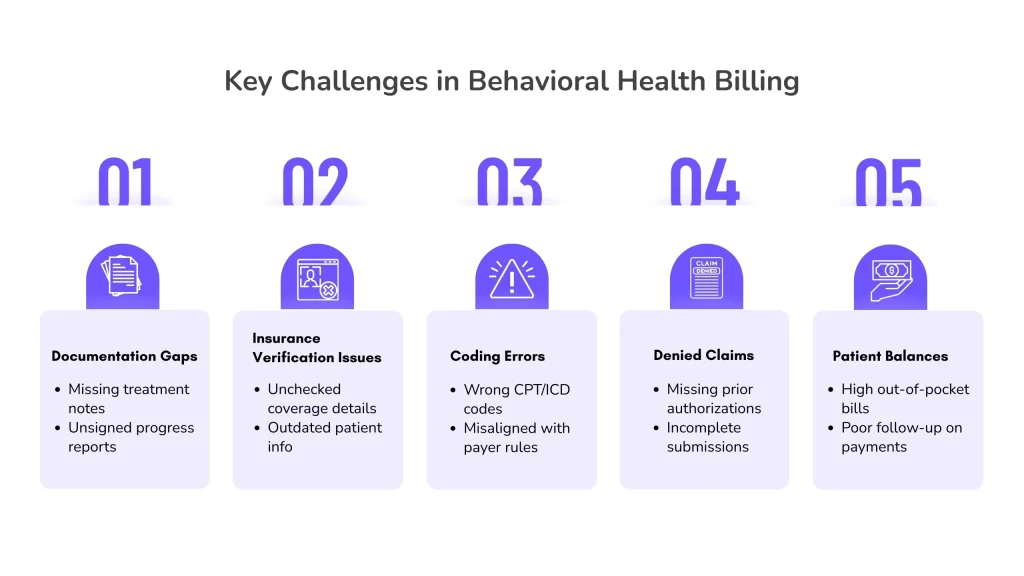
Every provider runs into billing struggles. Some happen every day, others sneak up during audits or end-of-month reporting. Let’s look at the ones that cause the most headaches.
Denials due to incomplete documentation
You finish a session, jot a few notes but leave out one important detail. That one missing piece is enough for a payer to push back the entire claim. Staff then go back, fix the file and resend it. All this for something that could have been done right the first time. And if denials keep piling up, they do not just slow revenue, they raise compliance flags too.
Coding errors and compliance risks
Coding is a minefield in behavioral health. Sessions often run over an hour, modifiers are needed and multiple services might happen at once. Pick the wrong code and suddenly the claim is either underpaid or denied. Code-related denials are no joke: one study found 15.7% of Medicare Advantage and 13.9% of commercial claims were denied on first submission, with over half of those denials later overturned but only after lengthy and costly appeals. Repeat this mistake enough times and compliance risks show up. What looks like a small error becomes a big money leak.
Insurance verification and authorization issues
Here’s another big one. A patient books an appointment, assumes insurance covers it and later finds out it doesn’t. Why? Because verification never happened. Or maybe prior authorization slipped through the cracks. Either way, the claim bounces. The provider wastes time, the patient feels upset and no one wins.
Delays in claims processing
Even clean claims sometimes take forever. Payments get stuck, cash flow slows and budgeting becomes hard. For behavioral health where margins are already thin, delays hurt more than people realize, which highlights why Revenue Cycle Management works differently here compared to general healthcare.
Managing Patient Balances
Patients not paying on time is another tough spot. Sometimes they do not understand the bill, sometimes they simply cannot afford it right away. Either way, balances pile up. Collections slow down and trust between provider and patient starts to crack, yet providers who strengthen RCM often see real financial benefits in cash flow and reimbursements.
Risks of Compliance
Rules in behavioral health are strict. Missing an update, forgetting a small step or not following guidelines exactly can set off alarms. Audits, penalties and lost income are the result. Compliance isn’t something you check once in a while, it has to be part of daily work.